
Two years ago an article appeared on this blog which questioned what the current state of rollerblading was and where it was heading. After further reflection and a more concerted effort to become involved into the rollerblading industry, how much of that perspective has changed?
On the surface, comparing rollerblading from the early 2000s
to today’s skating looks remarkably different. From the casual observer there
is a marked difference between the crazy stunts of Chris Haffey and the
technical style Eugin Enin currently flashes on the street.
However, another way to look at it is evolution. An excellent case study of this
would of Alex Broskow. The style of
Broskow has changed dramatically from the early 2000’s when he was sponsored
by Rollerblade and his current iteration as a member of Valo/Them
Skates.
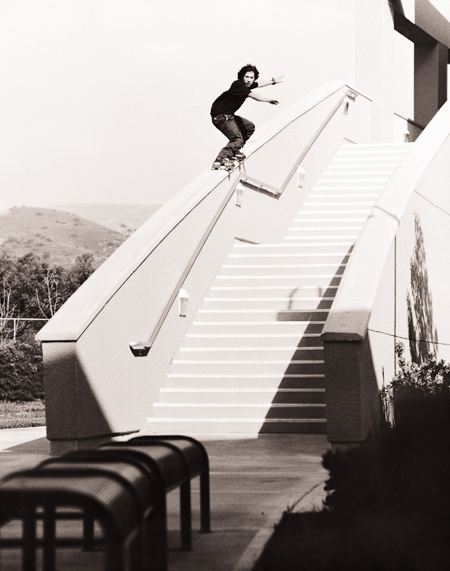
Photo: Brian Konoske
The key to this change is due to the fact that Broskow’s metamorphosis
occurred over an extended period of time. His change in styles was in reaction
to getting older in an industry which typically favored young, upcoming talent
over aging veterans. He, along with Chris Farmer, represents professional
skaters who have lasted over the last 15 years to remain in a prominent
position in the sport. Farmer achieved
this notoriety in much the same way, except his adaptation to a different style
appears shorter and more dramatic than Broskow’s when you compare Farmer’s
first big video section in VideoGroove 19 and where he was heading in Mindgame’s
video Bang which spans a timeframe of about three years.
In the early days of the sport there were only a small
handful of skaters who were pushing the more creative aspects of rollerblading:
Dustin Latimer, Dominic Sagona, and James Short. The vast majority of skaters of that era were
following the trends of stunts coming from the likes of Chris Haffey and
Brian Aragon. This presented a potential problem as the number of
skaters who emulated this style made the lines between sponsored/non-sponsored
became increasingly blurred. This also marginalized skaters who were looking
for more creative ways to skate over attempting life threatening tricks.

Photo:Be-Mag
Since then, the era of stunts has given way to the more
creative ways to skate due to the issues facing the sport with decreased
participation and vanishing profit margins. Just a Chris Garret mentioned, the
sport was in flux nearly 20 years ago and now the “Do It Yourself” approach has
taken over. Skaters now rely on their own wits and creativity to make their
mark and push the sport in directions not seen on film before. While the
sport has shrunk in numbers, it is consolidating the core and molding a new
niche that could secure its future.

No comments:
Post a Comment